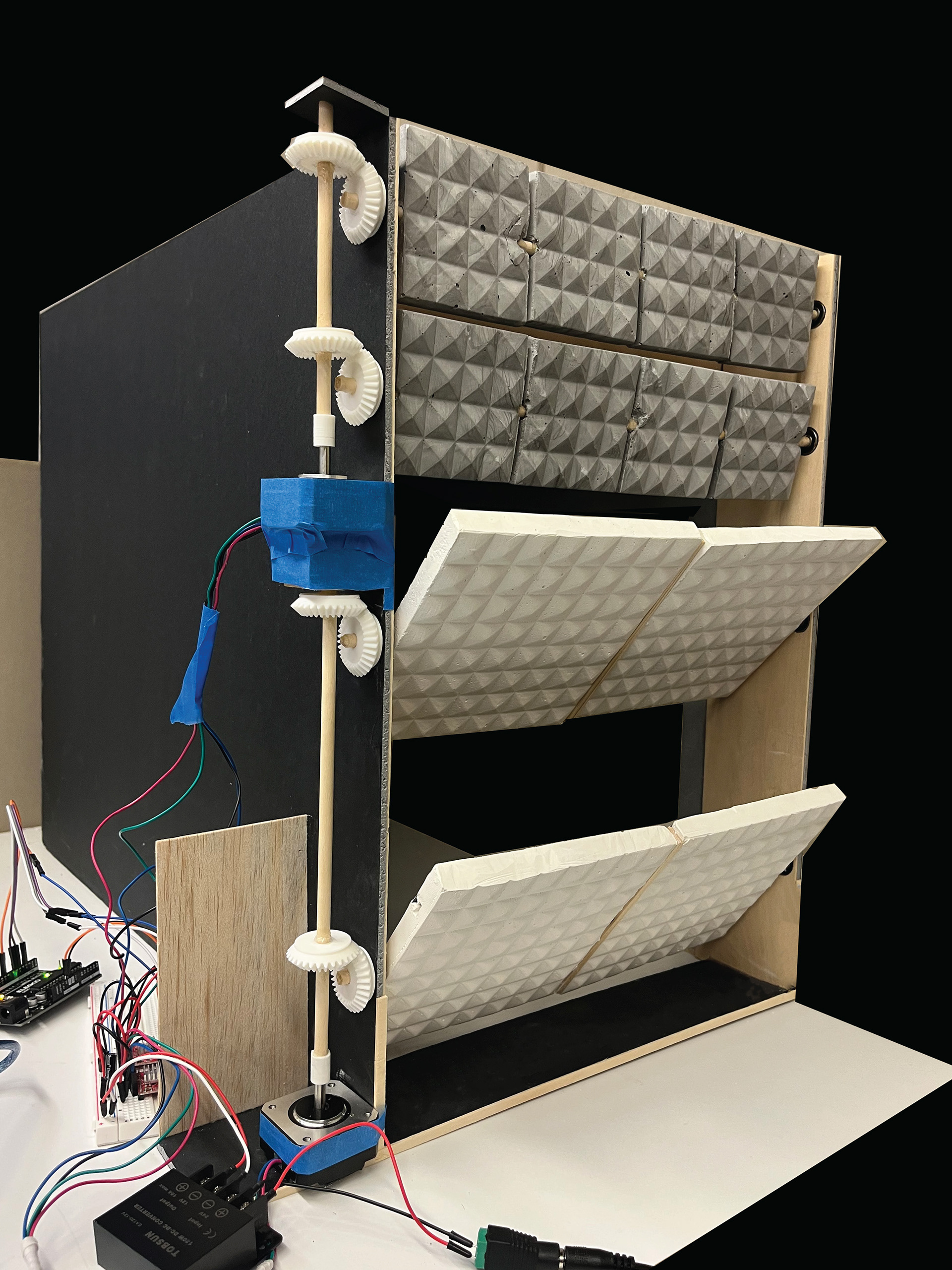
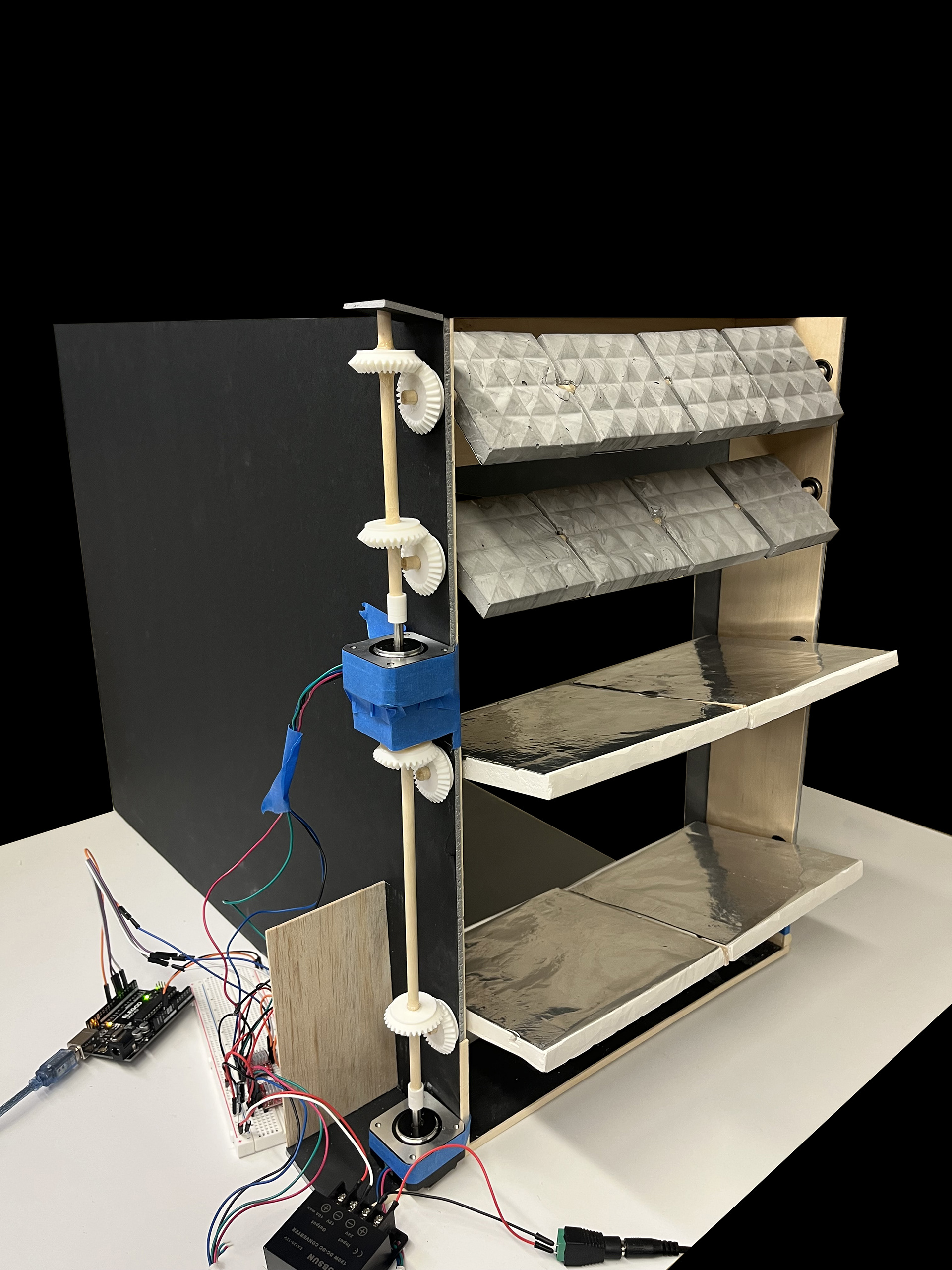
Hearth: Light and Warmth
Utilizing a traditional material in a non-traditional method
Utilizing a traditional material in a non-traditional method
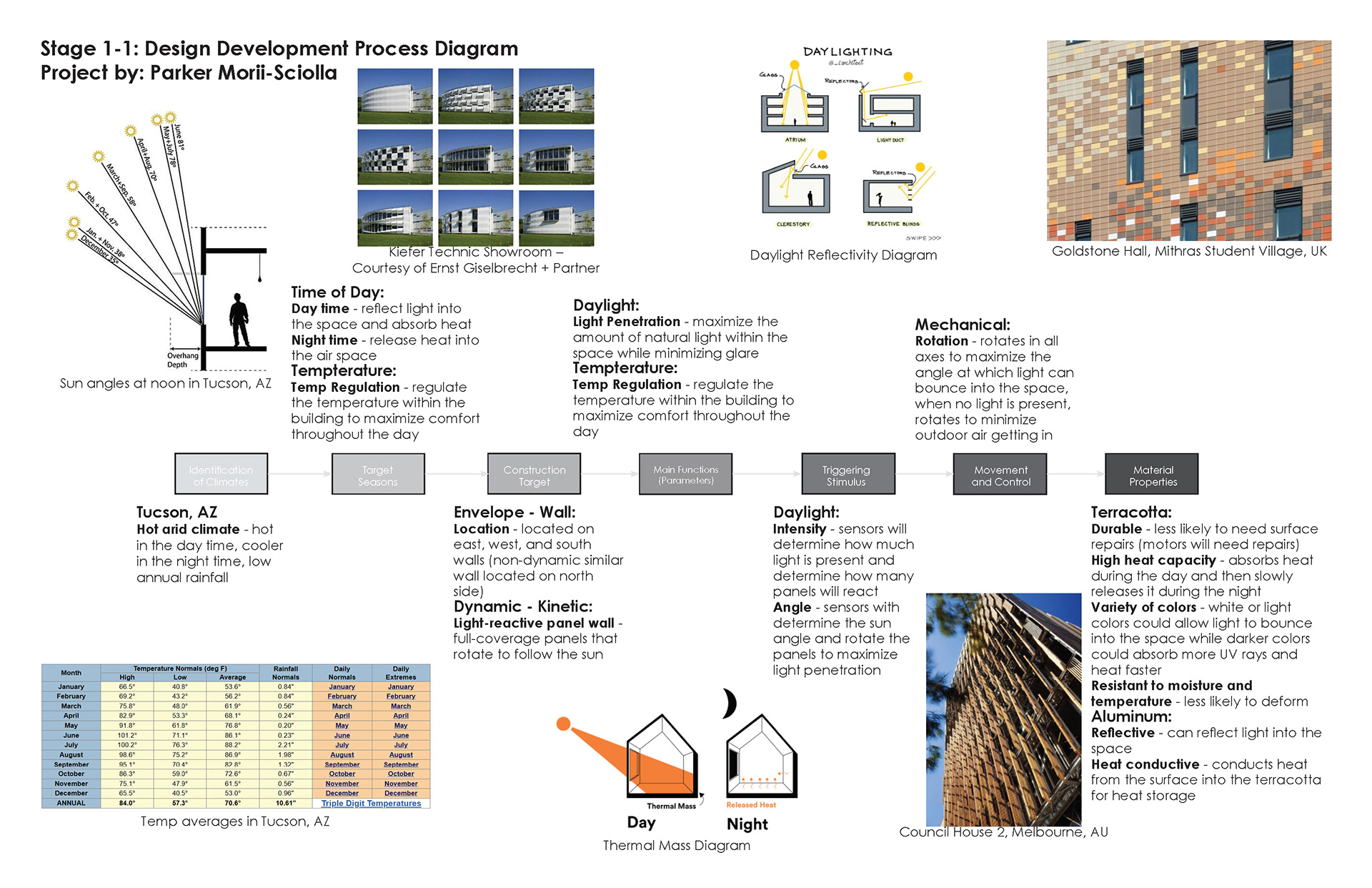
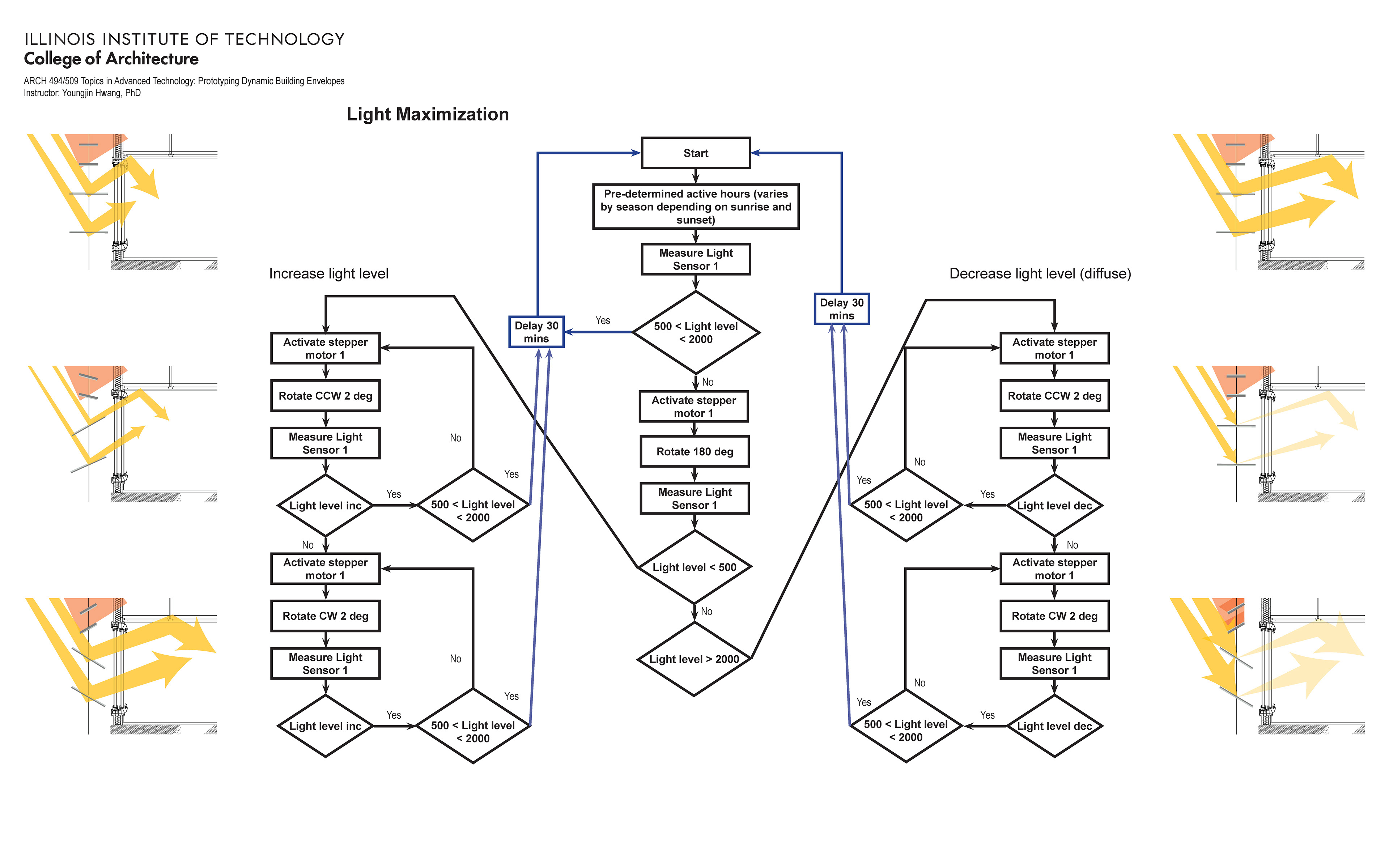
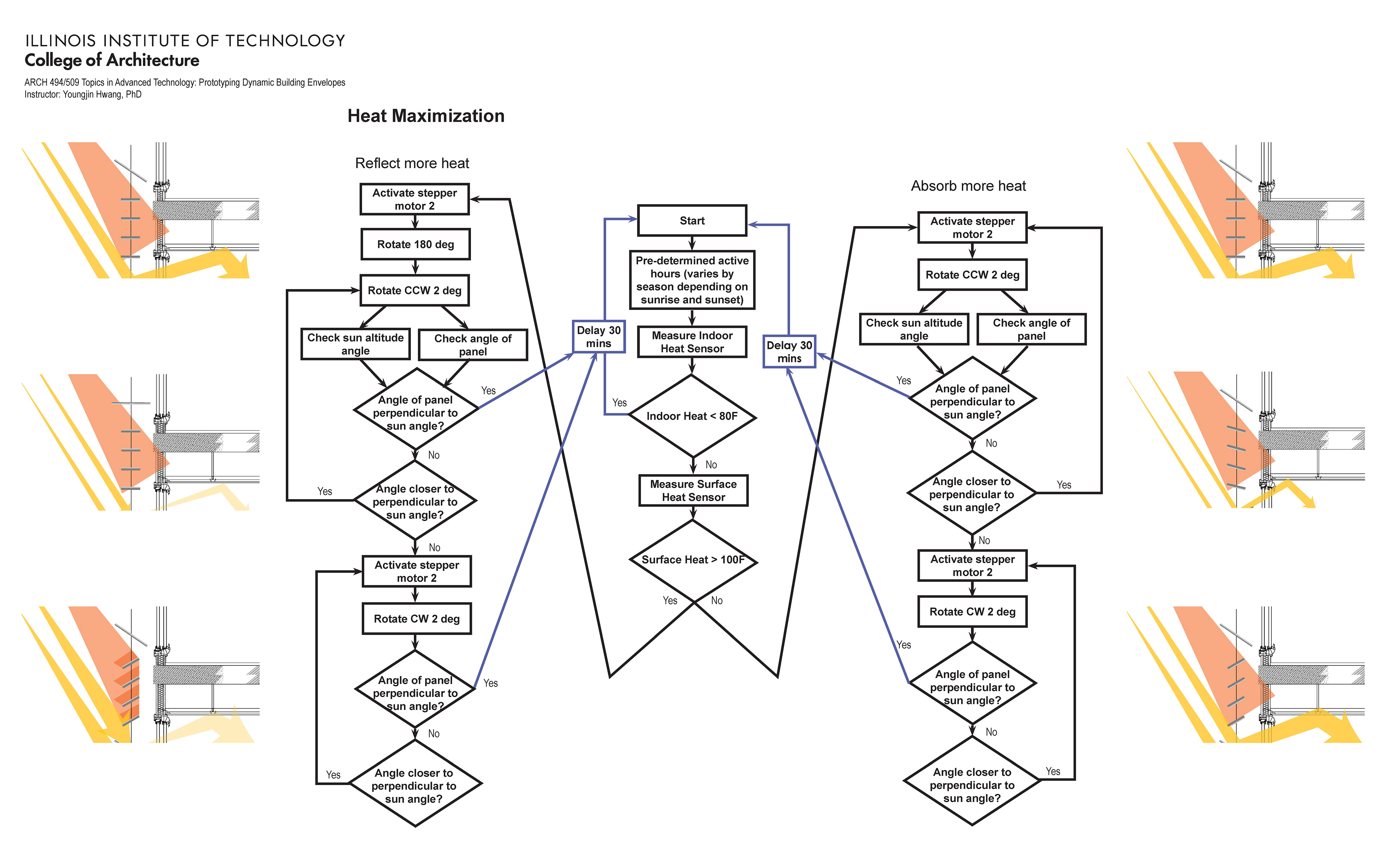
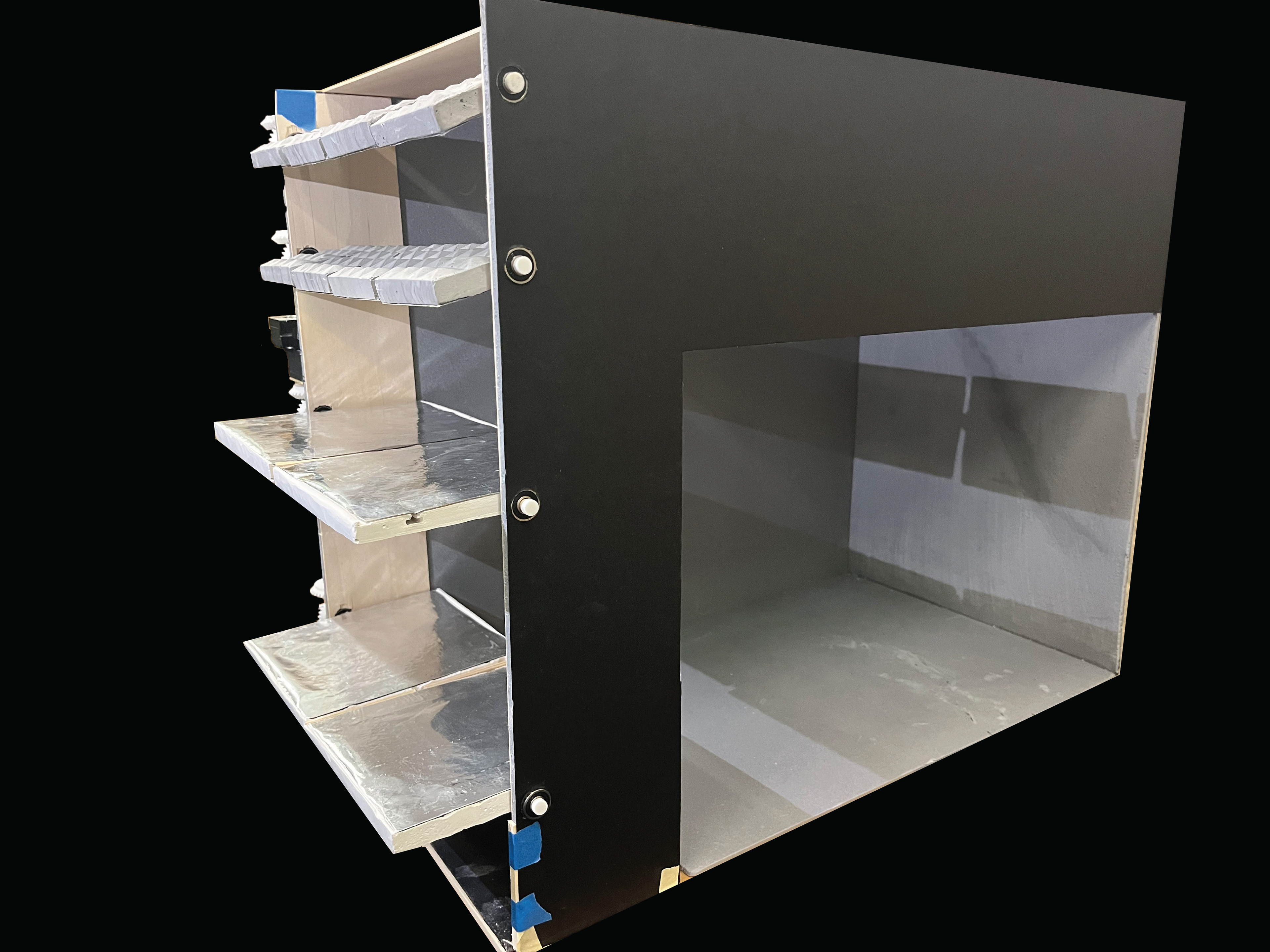
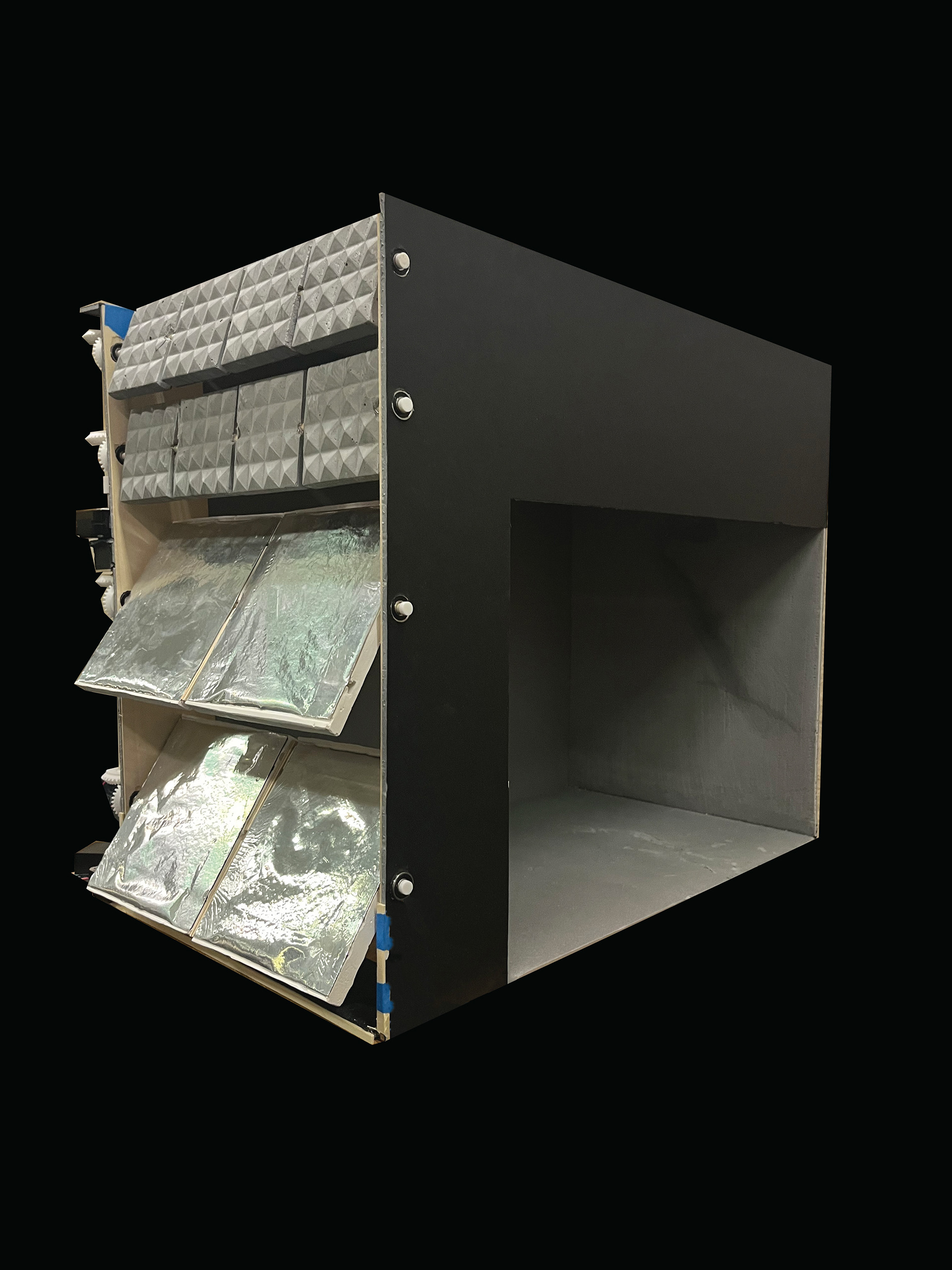
Terracotta is used in quite a few ways in architecture. It’s known for its durability and moldability, perfect for both structural and decorative elements. One thing that it’s never used for is within movable parts of a building. That’s not surprising, as it’s still a considerably heavy material. However, if it’s used as dynamic shading, it could be utilized for its heat sink properties.
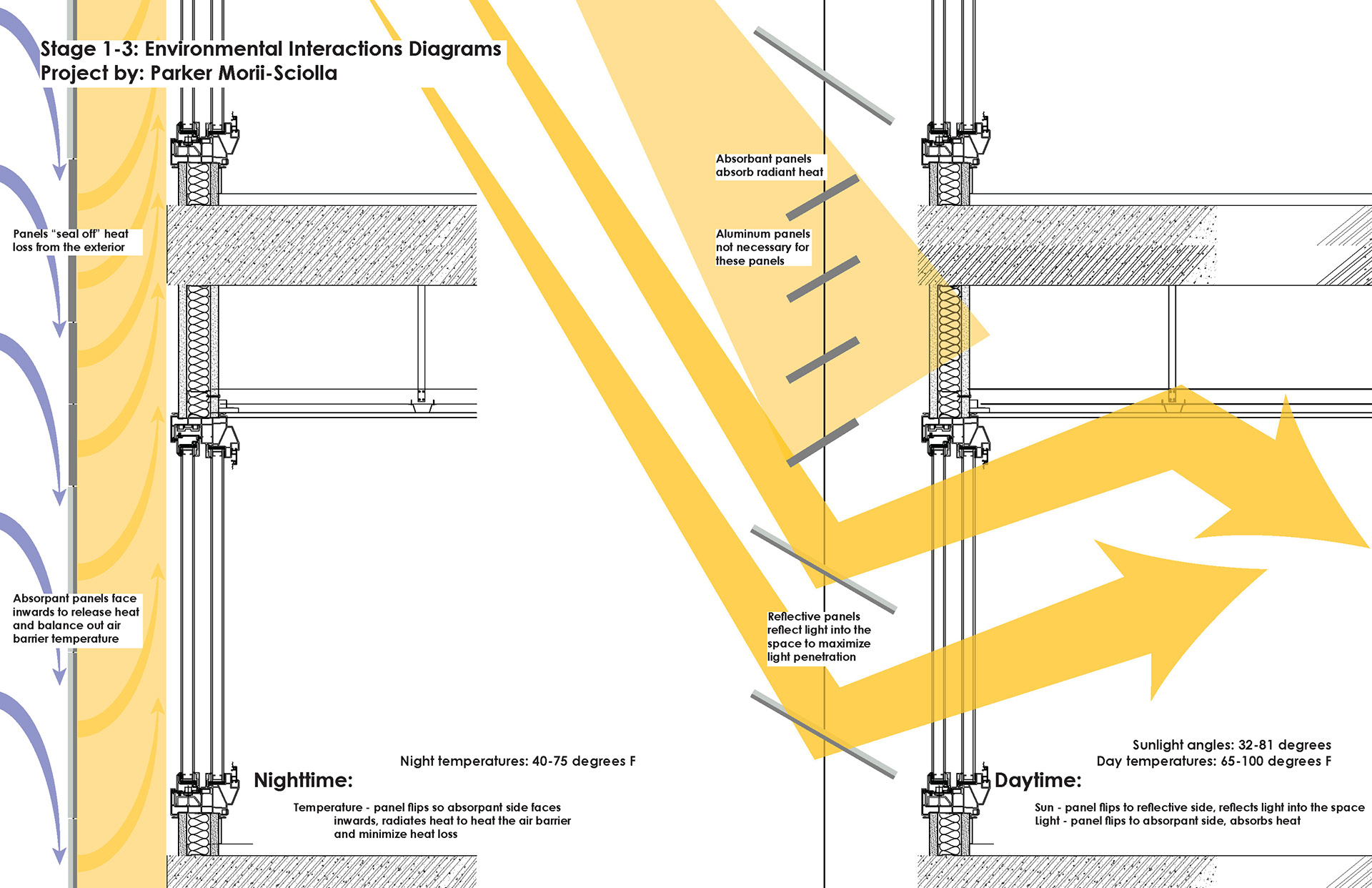
While it could be utilized in many locations, the best location to test this theory is Arizona, a hot arid climate with hot days and cold nights. Throughout the seasons, the temperatures don’t change much, but the sun angle does. Being able to adjust to the vastly changing sun angles to avoid glare and maximize heat absorption during the day will aid in maintaining with user comfort while also preparing for the evening temperatures.
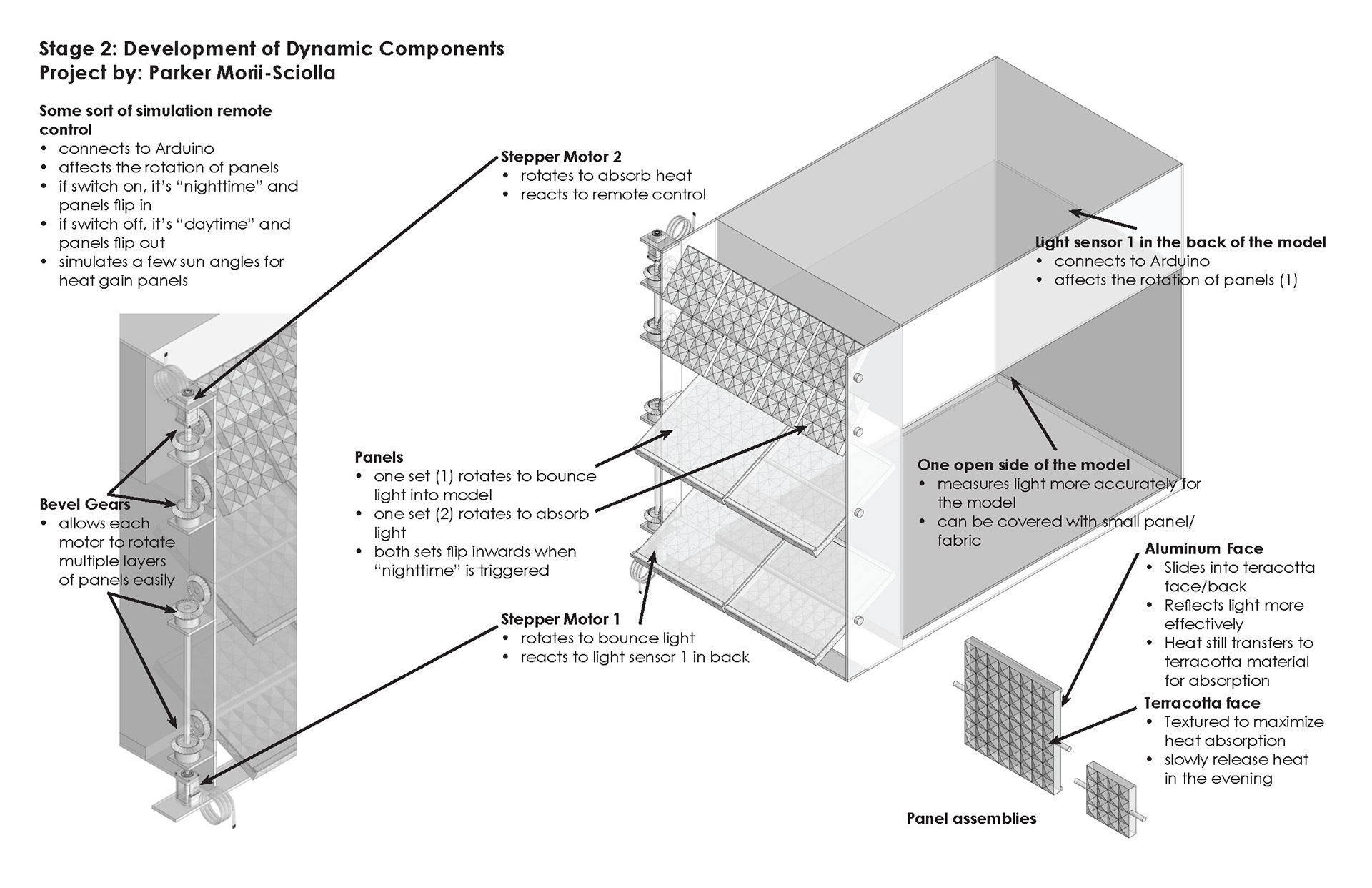
The terracotta’s heat sink properties allows for the heat to be absorbed by the panels to later be released into the air gap between the rainscreen and the envelope to maintain a more comfortable temperature indoors without too much heat loss.